Accountability After the Chaos: How the U.S. Restores the Rule of Law
Accountability is not optional. If power can break rules without consequences, democracy becomes a performance. We need truth on the record, equal justice under law, and nonpartisan guardrails like ethics, transparency, and real oversight so this does not happen again.
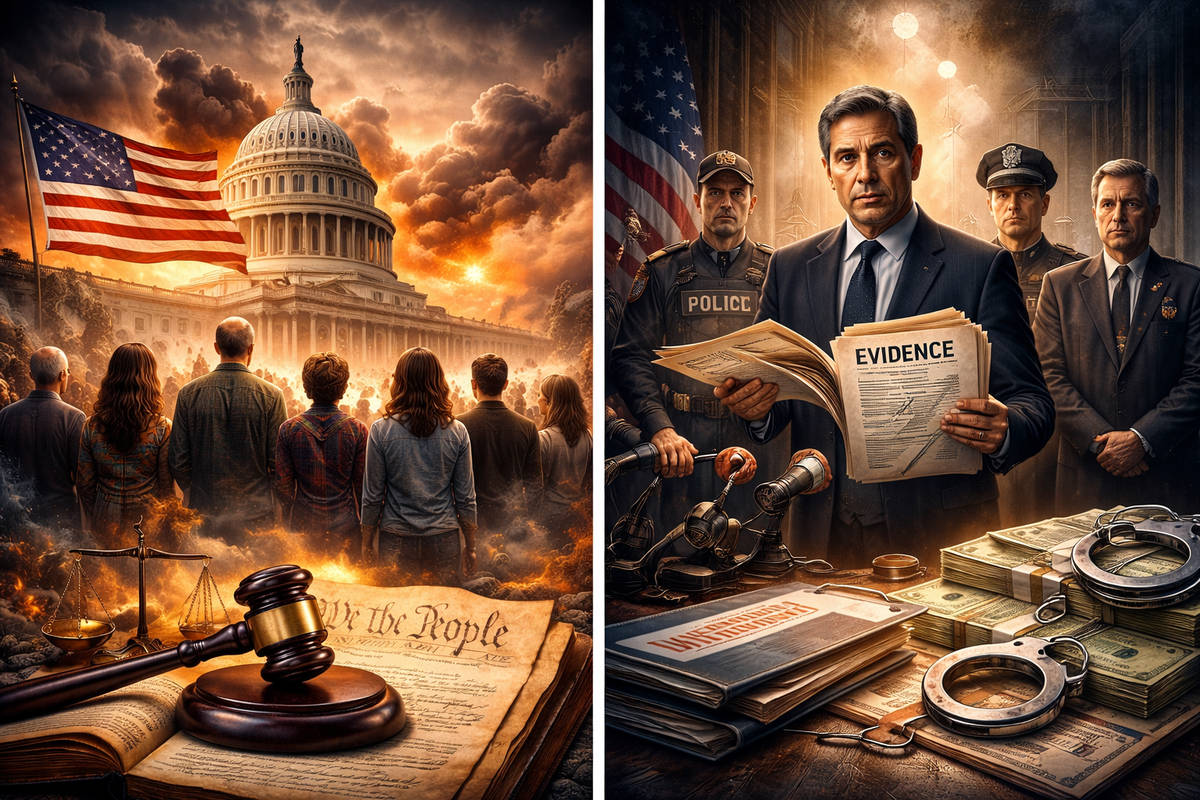
I keep coming back to the same conclusion
When the dust settles, the people who led us to where we are in the United States must face real accountability.
Not symbolic. Not “we looked into it and everyone learned a lesson.” Not a resignation followed by a paycheck, a TV gig, or a speaking tour. Actual consequences, through the legal and constitutional tools we already have, and the reforms we should’ve demanded years ago.
Because if we don’t draw a line somewhere, then we aren’t living under equal justice. We’re living under a two-tier system: one set of rules for regular people, and another set for the well-connected.
And that’s how countries rot. Quietly. Gradually. Right in front of everyone.
The hardest part: our system struggles to punish power
I want to believe our institutions can hold anyone accountable. I want to believe the rules apply to everybody. But I’m not naïve about what happens when the accused aren’t just “some person,” but people with donors, lawyers, insider networks, and influence.
Sometimes it feels like the system is built to handle ordinary crimes committed by ordinary people… but not extraordinary harm caused by extraordinary power.
And once powerful people learn they can bend the rules without consequences, the lesson spreads fast:
- Do whatever you want.
- Say whatever you need to say.
- Drag it out long enough and people will get tired.
- If you have the right friends, nothing sticks.
That’s not just “politics.” That’s a slow-motion breakdown of trust. And when people stop believing accountability is real, democracy turns into a performance.
Accountability isn’t revenge. It’s how we keep this from happening again.
There’s a difference between revenge and accountability.
Revenge is emotional. Accountability is structural.
Accountability says: we are not doing this again.
It’s not about “getting” someone. It’s about protecting the country from the next version of the same mess. It’s about discouraging the behavior now, not after history books get written.
And yes, our Constitution gives us tools for this:
- Investigate
- Put facts on the record
- Impeach when warranted
- Convict when warranted
- Protect due process the whole way through
- And then say the truth plainly, without spin
“Let the truth free” isn’t a slogan. It’s a requirement for fixing anything.
This isn’t new. We’ve seen what happens when guardrails fail.
A lot of people act like the real danger is “talking about accountability” because it might be divisive.
But historically? The real danger is what happens when leaders learn the system won’t stop them.
Think about how these patterns show up, over and over:
- Watergate wasn’t just about one scandal. It was about what happens when power starts treating oversight like an obstacle instead of a boundary.
- The 2008 financial crisis wasn’t just “bad luck.” It showed how weak enforcement and cozy relationships can create disaster, while regular people pay the bill.
- Post-9/11 emergency powers and surveillance debates showed how easy it is for “temporary measures” to become permanent habits if the public and Congress don’t push back.
Different eras. Different parties. Same theme: if the rules don’t bite, people test them.
That’s not cynicism. That’s just human nature with a suit and a microphone.
The Constitution is bruised, but it’s still standing
Here’s the part I refuse to give up on:
The Constitution may be bruised and battered, but it’s still there. It’s been there for almost 250 years for a reason.
It’s not perfect. It never was. But it’s the backbone of the idea that power should be restrained, not worshiped. That leaders serve the public, not themselves.
The problem is we keep acting like the document will protect us automatically.
A democracy doesn’t run on autopilot. Rights don’t stay rights just because they’re written down. Guardrails don’t work if they’re optional.
They work when they’re enforced.
Nonpartisan guardrails we should be able to agree on
(basic stuff, unless you benefit from the loopholes)
If you strip away party labels and culture-war noise, a lot of reforms are just common-sense safety features, the same way a plane needs redundant systems and a bank needs audits.
Here are reforms that should not be “left vs right.” They should be country vs corruption.
1) Stronger ethics rules with real enforcement
Not guidelines. Not pinky promises. Rules with teeth.
- Clear conflict-of-interest standards for top officials
- Mandatory financial disclosure that’s actually transparent
- Real penalties for violations (not a shrug and a headline)
If you’re making decisions that affect millions, “trust me” is not an ethics policy.
2) No more self-policing at the highest levels
Any system where powerful people investigate themselves is a joke.
- Independent oversight bodies with protected funding
- Inspectors general who can’t be quietly removed without cause
- Clear triggers for independent investigations when certain thresholds are met
Accountability can’t depend on whether the right people feel brave that week.
3) A hard ban on public officials trading stocks based on inside access
This should be one of the easiest bipartisan wins on earth.
If you can move markets with a closed-door briefing, you shouldn’t be trading like it’s a hobby. Public service shouldn’t come with a side hustle.
4) Transparency rules that make secrecy harder and honesty easier
Democracy dies in the dark isn’t just a catchy line. It’s a warning label.
- Stronger public records compliance
- Faster timelines and less “we’ll get back to you” games
- Clear consequences for destroying records or hiding communications
If you’re doing public business, the default should be public knowledge.
5) Campaign finance and lobbying guardrails
This is where the “power, money, connections” problem grows roots.
You don’t have to agree on every policy solution to agree on basic guardrails:
- More transparency around money flows
- Tighter rules on revolving-door lobbying
- Stronger disclosure requirements for political spending
At minimum, people should know who’s funding influence, and influence shouldn’t be a product.
6) Election protections that lower temperature and raise trust
This is not about helping one side win. It’s about making sure the people decide, period.
- Nonpartisan election administration standards
- Clear protections against intimidation
- Independent redistricting to reduce extreme gerrymandering incentives
- Funding for secure, auditable voting systems
If half the country doesn’t trust elections, we’re playing with gasoline.
7) Emergency powers reform
We can’t keep handing out blank checks during fear and hoping they get returned later.
- Time limits that force renewal votes
- Clear definitions of scope
- Independent review and oversight
- Automatic public reporting once the crisis passes
Temporary powers should expire automatically unless the public’s representatives renew them.
8) A plain-English standard for laws and oversight findings
This sounds small, but it matters.
When accountability becomes legal jargon that only insiders understand, it creates cover for everyone. Findings should be readable by a normal person who works a normal job.
Truth shouldn’t require a law degree.
A democracy that only works for the connected isn’t a democracy
Wanting a country that works bottom-up is not radical.
It’s the whole point.
Justice and prosperity for all, not just for those with power, money, and connections. Not just for the people who can buy access. Not just for the people who always land on their feet no matter what they break.
A democracy that only functions for the well-connected is not a democracy. It’s a brand. A performance. A script where ordinary people are told to clap and be grateful.
I’m not interested in performing patriotism. I’m interested in earning it back.
Why does it always feel like one step forward, three steps back?
It shouldn’t be this hard to protect what we were promised.
It shouldn’t be exhausting to insist on baseline standards:
- Leaders should tell the truth
- Laws should apply equally
- The vote should mean something
- Public service shouldn’t be a personal profit engine
And yet we keep having to fight for rights we already thought were settled. We keep watching “normal” get redefined downward.
That’s what frustrates me most: not only what happens, but how quickly we’re told to accept it.
We shouldn’t have to constantly claw back ground.
We shouldn’t have to trade truth for quiet.
We shouldn’t have to accept “less” as the price of peace.
If we don’t demand accountability, we’re giving permission
This is where I land every time:
If we let powerful people get away with it, we teach the next group of powerful people to go further.
That’s how the cycle escalates. That’s how democracy erodes, not in one dramatic collapse, but in a hundred moments where the public is exhausted and the system quietly shrugs.
We can do better than shrug.
We can demand investigations that aren’t theater. We can push for guardrails that don’t depend on “good people” being in the room. We can stop treating accountability like it’s impolite.
Because this country doesn’t belong to the people with the most money.
It belongs to all of us.
And when the dust settles, justice can’t be a luxury product.
Conclusion
Here’s the truth: I don’t want a perfect country. I want a fair one. One where power has limits, where money isn’t a cheat code, and where public service isn’t a shield from consequences. If we can’t hold the most powerful accountable, then we’re admitting the rest of us are just here to pay the bill. I’m not willing to accept that—and I don’t think most Americans are either.