The Files, the Deadline, and the Silence
The Epstein files were promised, the deadline passed, and millions of pages remain hidden. Redactions, delays, and silence have deepened public distrust,raising hard questions about transparency, accountability, and what happens when the spotlight gets too hot.
I’m going to try to write this the way a real person would talk when they’re hurting, without turning it into a conspiracy rant, and without letting powerful people hide behind confusion.
Because the truth is: the “Epstein files” have become one of those stories that makes Americans feel sick in a very specific way. It’s not just the crime. It’s the sense that there’s always another door, another delay, another reason the public can’t see what it was promised. It’s the feeling that the system protects itself first, especially when the people involved are rich, connected, or politically useful.
And right now, as of late January 2026, the basic facts are hard to argue with: the Trump administration’s Justice Department missed a legal deadline to release the Epstein files, and most of the material is still not public.
That doesn’t automatically mean a cover-up. It does automatically mean we were promised transparency by law, and we didn’t get it.
And when a country is already worn down, already raw from so many traumas, this kind of delay becomes gasoline.
What people mean when they say “the Epstein files”
First, it helps to slow down and define what we’re talking about.
When people say “Epstein files,” they’re usually referring to a huge collection of investigative records related to Jeffrey Epstein and his network, documents, photos, logs, notes, statements, evidence gathered over years. A lot of Epstein-related material has been public in some form for years through court cases, FOIA releases, and lawsuits. But the public has believed, often correctly, that the government still has a large amount of unreleased material.
To address that, Congress passed a law: the Epstein Files Transparency Act, which President Donald Trump signed in November 2025.
The law set a deadline: the Justice Department was required to release the unclassified Epstein-related records by December 19, 2025 (with narrow exceptions and protections, especially for victims).
That deadline came and went.
The files are past due, and it’s not a small miss
According to reporting in January 2026, DOJ officials have acknowledged that more than two million documents still had not been released, meaning less than 1% of the materials had been made public at that point.
AP has also reported the department’s estimate ballooning into the millions of documents under review, with hundreds of attorneys assigned, and an “all-hands-on-deck” approach.
So yes, scale is real. This is a massive review. But that leads to the painful, simple question average people keep asking:
If it was too big to do by the deadline, why was the deadline written that way, and why were we told it would happen?
Because the law wasn’t passed quietly. It was sold as a transparency moment.
And now we’re watching transparency come out in drips, with long silences in between.
About the redactions: what’s legitimate, and what feels unacceptable
Here’s where I want to be careful, because this part matters to survivors most of all.
There are absolutely valid reasons to redact. You cannot release identifying details about victims of sexual abuse and trafficking. You shouldn’t release personal data for uninvolved private people. You also can’t compromise ongoing investigations when there’s a legitimate, active need to protect sensitive information.
DOJ has said redactions are necessary specifically to protect victims’ identities and sensitive information.
But there’s another reality at the same time: the level of redaction has been extreme.
CBS News found that in the initial release, at least 550 pages were fully blacked out, entire pages where the public got nothing but darkness.
That’s where trust starts to break.
Because you can protect victims without turning huge parts of the record into a wall of ink. And when the government does it anyway, people don’t just feel protected. they feel the government can't be or shouldn't be trusted.
Even more troubling: there have been reports that some redactions were done in ways that were not technically secure, allowing information to be recovered or “unredacted” in circulation, something that, if true, is the opposite of protecting victims. (That concern has been widely reported; DOJ’s own disclosures page also warns that sensitive information might have been inadvertently included and asks the public to report it.)
So we end up in the worst possible place:
not enough transparency to satisfy the public and not enough care to satisfy survivors.
That’s how you create national rage and survivor retraumatization at the same time.
Why the judge said “no” to an independent monitor and why that still matters
After the deadline miss, the two lawmakers who co-wrote the Act, Rep. Ro Khanna (D) and Rep. Thomas Massie (R), tried to push for an independent monitor to oversee DOJ compliance.
A federal judge rejected their attempt, not because transparency doesn’t matter, but because the request was attached to the wrong legal vehicle (Maxwell’s criminal case), and the judge said he didn’t have authority in that context.
But here’s the part people shouldn’t miss: the judge reportedly still described the underlying concerns as “important” and “timely,” and pointed lawmakers toward other routes, like a separate lawsuit or congressional tools.
So even in the “no,” there’s a recognition: this is serious, and DOJ needs oversight pressure.
And survivors have said the delay itself is harmful, AP reported the lawmakers argued it caused “serious trauma to survivors,” and the judge received communications from survivors expressing fear DOJ would not comply without oversight.
That right there is the moral center of this whole thing.
Not political points. Not viral memes. Survivors.
The Trump factor: what’s fair to say, and what crosses the line
This is where I’m going to keep it grounded.
Fact: Trump signed the law that required disclosure.
Fact: DOJ under Trump’s administration missed the deadline and has released a small fraction so far.
Fact: The release has included heavy redactions and has drawn bipartisan criticism.
What we cannot honestly claim as fact,without direct evidence, is that Trump is personally ordering delays to protect himself or specific people.
But we can talk about something more basic and more observable: how political power behaves when it’s under pressure.
Even Reuters, covering the DOJ release, noted the sensitivity around Trump’s presence in the released materials, such as a photo being removed and later restored after review, with DOJ saying the initial removal was about protecting victims, not politics.
And we can also talk about how attention works.
When a story is damaging, complicated, and morally radioactive, leaders often have an incentive to fill the public space with other stories, sometimes intentionally, sometimes simply because they thrive in constant conflict and motion. That doesn’t require a secret plan. It requires a working understanding of modern media.
There’s also reporting that critics have accused Trump of trying to steer attention away from Epstein-file scrutiny at various points.
So when you say, “divert attention away even if not fully intentional,” I think that’s a fair frame, because it doesn’t claim mind-reading. It acknowledges a pattern Americans recognize:
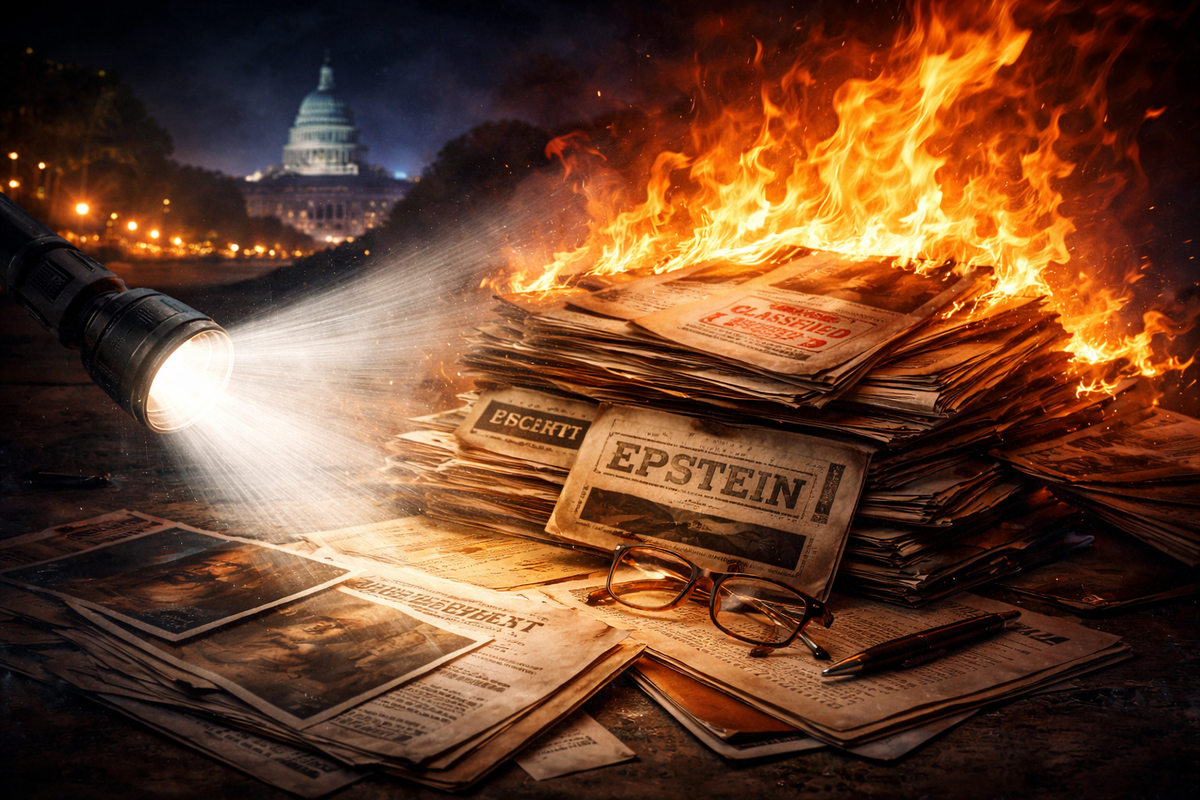
when the spotlight gets too hot, something else suddenly catches fire.
And in a country like ours, already exhausted, people often don’t notice when accountability quietly slips out the back door.
What it says about the administration, and the people who enable it
This is another place where the truth is painful, and it’s not limited to one party.
The Epstein story has become a test of whether leaders actually mean what they say when they promise transparency.
Some lawmakers are still pushing hard. Time reported that Khanna and Massie have continued pressing for oversight, while prominent figures like Sen. Chuck Schumer have publicly criticized DOJ for missing the deadline and releasing so little.
But Time also reported that some Republicans who initially supported the law have “dialed back” their outrage and moved on, with committee leadership saying DOJ is cooperating even while admitting they’d like it faster.
That’s what enabling looks like in real life.
It doesn’t always look like cheering. Sometimes it looks like shrugging. Sometimes it looks like “there are bigger issues.” Sometimes it looks like silence.
And silence is powerful. Because silence tells the system: you can wait this out.
This matters, because when government becomes confident it can outlast public attention, it learns a dangerous lesson: delay is a strategy.
And delay, in a case involving sexual violence and trafficking, isn’t neutral. It has human cost.
The empathy problem: how a country starts treating suffering like content
I want to say this plainly: I think part of what we’re watching is not just a political problem. It’s an empathy problem.
Some Americans hear “Epstein” and immediately jump to a team sport:
“Which side is implicated?”
“Which politician can I blame?”
“Which enemy can I humiliate?”
And that right there is how empathy leaks out of a society—drop by drop—until people stop seeing victims and start seeing ammo.
But these were real girls. Real young women. Real lives.
And yes, people are allowed to demand accountability. People should. But we’re losing something sacred when we treat human trauma like a scoreboard.
When lawmakers and survivors are saying the delays are retraumatizing, that should be the moment everyone slows down and gets quiet and serious.
Because if we can’t hold empathy for victims of trafficking, if even that becomes political entertainment, what does that say about us?
It says we’re becoming a country that can look right at pain and ask, “How can I use this?”
That is a cultural and societal sickness.
Bringing it back to Minneapolis; carefully
I want to be responsible with this connection.
The deaths in Minneapolis were not “caused” by Epstein news. That would be an irresponsible claim. Those were real events with real causes, real decisions, real accountability questions that stand on their own.
But here’s what I do think is fair to say:
When the national conversation is dominated by chaos, whether it’s immigration raids, violent encounters, lawsuits, scandal cycles, our attention gets pulled in a hundred directions at once. And in that environment, slow-moving accountability stories (like document releases and redaction fights) can disappear from public focus without ever being resolved.
That doesn’t mean Minneapolis was a diversion.
It means a country overloaded with crisis becomes easier to manage with distraction, whether anyone “intended” it or not.
And when that happens, terrible things become side effects:
- victims and families feel abandoned,
- investigations become political,
- truth becomes something we have to fight for.
What we can reasonably demand next
If we want to be serious—and not just loud, then the basic demands are not extreme:
- A clear public schedule from DOJ: what’s left, how many documents, and when batches will be released. (Right now, the DOJ’s Epstein Library exists and notes it will be updated, but that’s not the same as a timeline people can trust.)
- Victim-first redaction standards that are truly protective, not sloppy, not reversible, not performative.
- Independent oversight mechanisms, whether through a new lawsuit, congressional action, or a revised law with actual enforcement teeth, since the current situation shows how weak a deadline can be without penalties.
- A culture shift in the public: stop treating “names in documents” as automatic proof of guilt. AP has repeatedly emphasized in its coverage that a name appearing in records does not necessarily imply wrongdoing. That principle matters if we care about truth and not just outrage.
A small, real hope (not the fake kind)
I don’t want to end this pretending everything will be fine. That’s not where we are.
But I do see a light, and it’s not a fantasy: it’s pressure.
This issue is still drawing bipartisan attention. A major news magazine is tracking the missed deadline and the “less than 1%” reality.
The AP is documenting the legal and moral stakes, including survivor voices.
DOJ has been forced to operate in public with a dedicated library, rather than keeping everything buried.
And most importantly: survivors and advocates keep refusing to let the country look away.
That’s the hope I can live with, the grounded kind.
Not “someone will save us.”
But we can keep demanding the truth, and we can keep demanding that victims are treated like human beings, not like collateral damage in a political war.
If America is going to heal any part of itself, it’s going to start with this:
we stop treating suffering like content, we stop letting delay become a strategy, and we insist, patiently, relentlessly, that truth belongs to the people.
 MICHAEL R. SISAK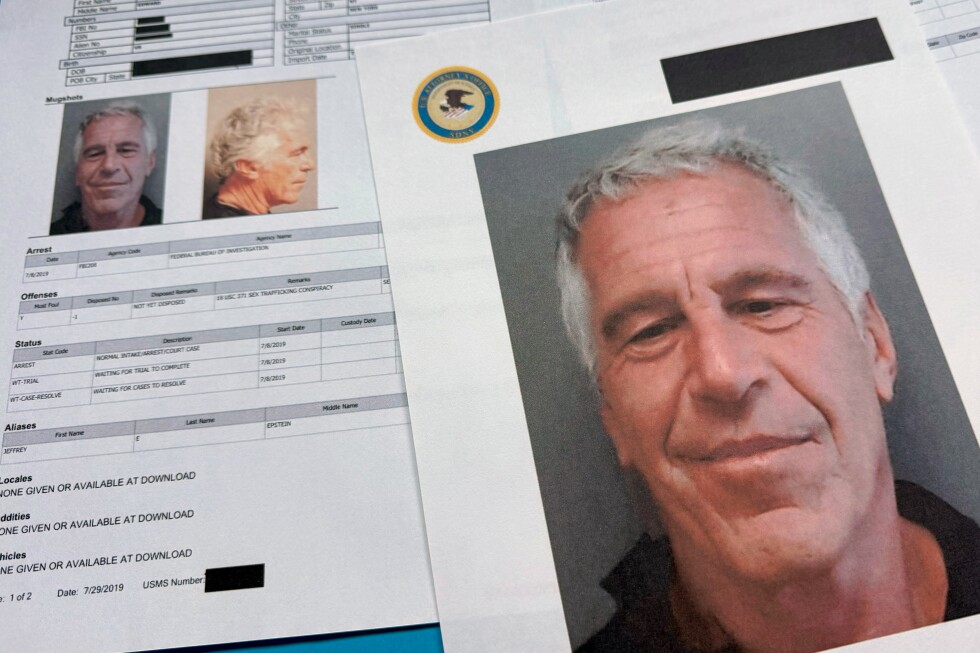
 Chantelle Lee
 STEPHEN GROVES