The immigration crackdown is hurting the economy — and the people who actually keep it running
Fear-driven immigration crackdowns don’t just “remove” people. they hollow out communities. Workers stay home, shoppers disappear, projects stall, and small businesses lose revenue. The human cost hits first, and the economic damage follows right behind.

There’s a story people tell themselves about immigration crackdowns: that it’s “about the border,” “about criminals,” “about rules,” and that the rest of us will barely notice.
But that isn’t what this looks like on the ground.
On the ground, it looks like a mom who stops going to the grocery store because she’s scared a routine errand turns into a life-altering stop. It looks like a worker who skips a shift because the parking lot feels like a trap. It looks like families who stop driving to church, the clinic, parent-teacher night, because the risk feels too high.
And then it turns into something everyone notices: empty aisles, quieter main streets, stalled job sites, restaurants with fewer tables filled, and businesses quietly saying, we’re bleeding.
This crackdown isn’t just policy — it’s fear as an economic force
Fear changes behavior fast.
Reuters reported that in some Hispanic communities, people have been avoiding going out because of high-profile immigration raids, shifting more shopping online, and leaving small local businesses exposed because they can’t compete with the big platforms.
That’s not an abstract trend line. That’s rent money. That’s payroll. That’s a family business watching foot traffic fall off a cliff and asking, “How do I survive this month?”
And the fear doesn’t stay neatly confined to “undocumented.” Reuters also noted that the anxiety can spill over to people who are here legally, because fear doesn’t always wait around for paperwork.
What happens when people are “removed” isn’t clean — it’s violent to a community
When someone is taken out of a community suddenly, it isn’t just the loss of a worker.
It’s:
- a kid whose parent doesn’t show up at pickup
- a rent payment that doesn’t happen
- a car left behind
- a job abandoned mid-week
- a small business down a key employee and now down a whole network of customers who don’t feel safe being seen
If you want to understand the real damage, don’t just count deportations. Count the quiet disappearances from daily life.
The local hit is real — and it adds up fast
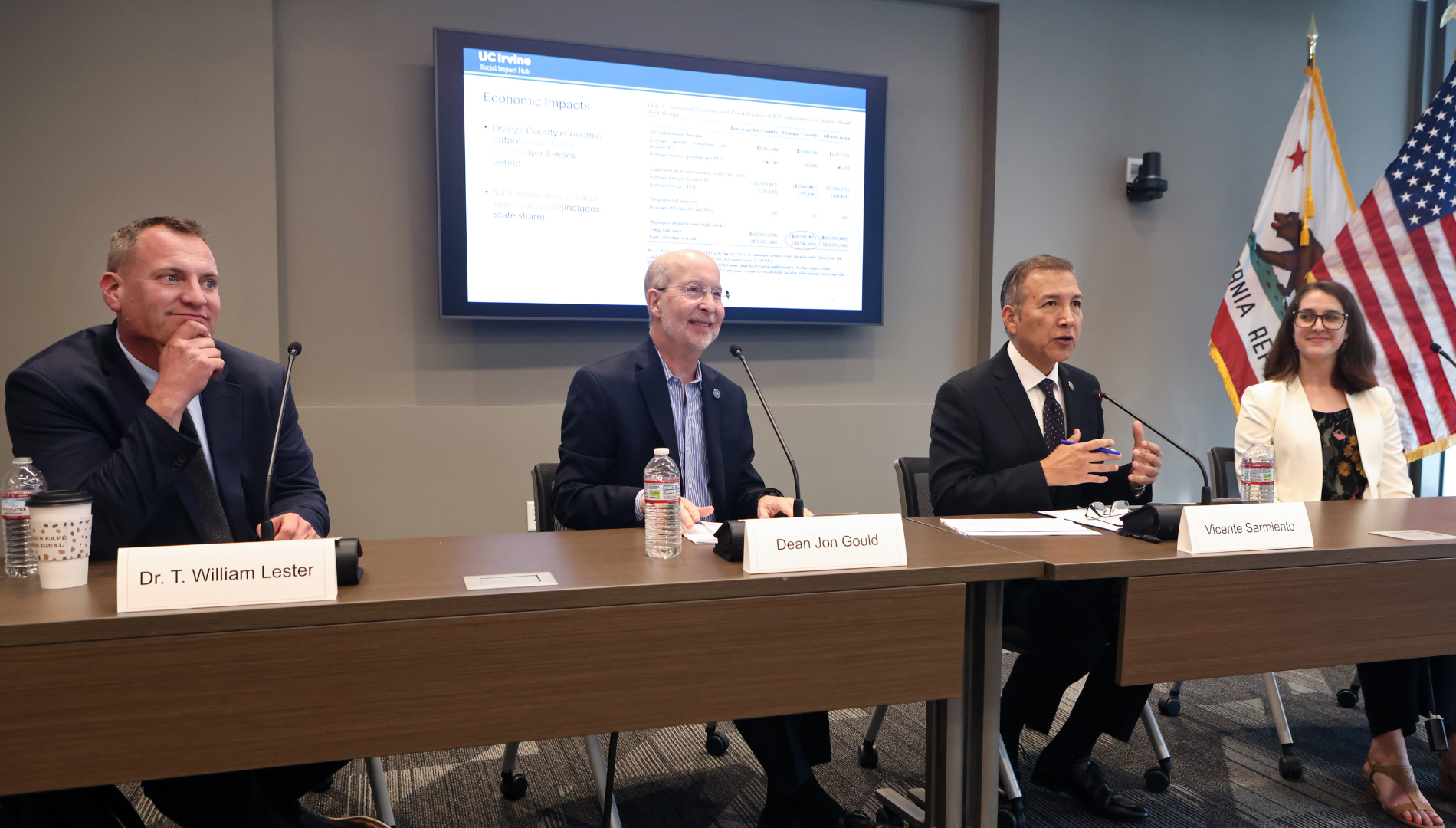
One of the clearest snapshots comes from Orange County, California. UC Irvine researchers reported about $58.9 million in lost economic activity over an eight-week period following May 2025 ICE raids, along with an estimated $4.5 million less in sales tax revenue for local governments.
That’s the part people miss: when fear pulls people indoors, cities lose revenue too, meaning fewer resources for schools, roads, emergency services, everything.
The labor shock doesn’t “help workers” — it squeezes working people
There’s a simple reality: entire industries are built on immigrant labor, documented and undocumented. When enforcement turns chaotic, when people are scared to show up, work doesn’t magically transfer to someone else the next day.
It stalls. It gets more expensive. It gets riskier. And the pressure rolls downhill.
Economists have been warning about what happens when you shrink the labor force abruptly. A Reuters analysis pointed to concerns that stricter immigration enforcement and reduced legal worker programs could meaningfully tighten labor supply, especially in sectors like agriculture and construction, and weigh on growth.
Penn Wharton Budget Model estimates that large-scale deportation policies can reduce GDP compared to baseline projections and reduce hours worked, while also reducing tax revenue because many unauthorized immigrants pay income/payroll taxes.
And it’s not just “big picture GDP.” The Economic Policy Institute has argued that mass deportation would ripple outward into broader job losses, because workers aren’t just labor, they’re also customers, tenants, and the spending that keeps local economies alive.
Now here’s the part people don’t want to admit: you can see this in the biggest brands in America
This is the transition where the conversation usually changes.
Because it’s easy for people to ignore the pain when they think it’s happening “over there,” to “other people,” in industries they don’t personally touch.
But when the biggest, most mainstream, household-name brands start showing the stress, suddenly it becomes real.
Walmart, “mass retailers,” and the quiet collapse of foot traffic
Retail consultancy Kantar found that Hispanic shoppers reported visiting mass retailers less frequently—self-reported visits falling 14.7% year-over-year in one period (April–June), compared with smaller declines among non-Hispanic groups.
And Reuters reported raids happening in places like Walmart parking lots, the kind of detail that tells you why fear and shopping behavior can change so quickly.
When foot traffic drops, it doesn’t just hurt a quarterly report. It hurts the people working the registers, stocking shelves, running the small vendors nearby, and trying to keep their own families afloat.
Home Depot: where enforcement meets the job site
Reuters also reported raids at Home Depot locations—a known gathering point for day laborers.
AP’s on-the-ground reporting in Southern California described repeated enforcement operations at a Home Depot where day laborers gather, and how workers have resorted to lookout systems and evasive tactics just to avoid being detained.
That matters because Home Depot isn’t just a store. It’s a nerve center for construction labor. When workers scatter, the shock doesn’t stay in the parking lot:
- contractors miss crews
- remodels take longer
- bids get more expensive
- timelines slip
- working homeowners pay the price
And there’s already a skilled labor problem even without chaos layered on top. The Home Depot Foundation itself highlighted research pointing to the construction skilled labor gap as a major barrier to rebuilding and recovery after disasters.
So when enforcement ramps up in exactly the places working-class labor gathers, it’s like yanking fuses out of the system and then acting surprised the lights flicker.
“It’s just business”… until it’s your business
In Texas, Reuters described a case where an ICE raid at a flea market in Alamo reportedly led to a sharp drop in vendors and activity.
That’s not “politics.” That’s livelihoods evaporating.
And once local vendors lose income, they buy less from suppliers, they pay less rent, they hire fewer helpers, this is how economic damage spreads.
The “they asked for it” moment: supporters who didn’t think the fallout would reach them
There’s a brutal pattern in American politics: some people support harsh policies because they assume harm will stay neatly contained.
Then it doesn’t.
ProPublica reported on Florida state Rep. Rick Roth and the politics around Florida’s SB 1718, showing how crackdowns can hit communities and employers, while some well-connected operations insulate themselves through visa programs.
Florida’s own policy researchers estimated that removing undocumented workers would hit labor-intensive industries hard, projecting large potential GDP losses tied to workforce disruption.
And when labor shortages get bad enough, the “solution” some lawmakers float tells you everything: Florida lawmakers moved to loosen child labor rules after the state’s tougher immigrant employment law, with critics arguing it was an attempt to backfill workforce gaps.
That’s where we are: not solving root problems. just shifting the burden onto whoever has the least power.
This isn’t “the American way” because it treats people like parts you can remove without consequences
Here’s the truth I don’t want us to dodge:
You can’t build an economy on people’s labor—invite them into the hardest jobs, the longest shifts, the lowest margins, and then turn around and govern them through terror, raids, and public spectacle.
That’s not order. That’s a system that runs on fear.
And fear has a cost. A big one. UC Irvine’s estimate of tens of millions lost in just weeks is one way to measure it. But the deeper cost is harder to quantify: kids living with constant anxiety, families not reporting crimes, people avoiding hospitals, communities going quiet.
What the fix looks like (because we already know what doesn’t work)
If the goal is safety and stability, then the answer is not mass fear.
The fix looks like:
- Targeted enforcement that prioritizes serious crime, not dragnet-style sweeps that spook entire communities.
- Functional legal pathways for work that match real labor demand, so industries aren’t built on an open secret.
- Real labor protections so employers can’t use status as a weapon and workers can report abuse without risking removal.
- A system that moves cases quickly and fairly, instead of keeping people in limbo for years.
This post doesn’t need a hopeful ending, because the conclusion is already written in the evidence: when you treat human beings as disposable, the damage doesn’t stay contained. It spreads, into workplaces, paychecks, storefronts, schools, and the “normal life” we’re told isn’t supposed to be touched.
And if we want an economy that works for working people, we can’t keep choosing policies that make working people disappear.
Sources and links